Research | Consulting | Social media | Marketing
Blog
Collectables: the fandom powerhouse
Summer 2026 trend debrief
Collectables:
the fandom powerhouse
We are the world's leading research & strategy, creative and marketing agency specialising in kids, teens and family fandom.
We help clients understand their audience better, communicate their story more effectively, and reach their audience more efficiently.
01 - Introduction
Collecting is a $330bn habit - and it is accelerating.
$330bn
Global collectables market in 2025, up 15% year on year (excluding fine art and antiques).
350%
Growth in US trading card sales since 2020 - 67% of all gains in the toy industry in 2025.
+35%
Toy collectables growth in 2025 - the engine behind growth across the entire sector.
28%
Share of global toy sales now taken by adults (18+), up from 25.5% in 2022. The kidult economy.
What is driving the current wave?
Collecting never went away. Five shifts turned a steady hobby into the fastest-moving format in fandom.
Shift 1
The pack opening became the content
TikTok's unboxing niche has grown ~200% in two years; unboxing pulls 4.8bn+ annual views on YouTube. It isn't going away.
Shift 2
The audience doubled
In the US, the 18+ cohort spent US$9.1bn on toys in 2025, growing ~20% year on year. Kidults are now a primary market.
Read: the rise of kidultsShift 3
It went properly global
A craze that starts in China or Japan now spreads worldwide within weeks. Labubu is the proof.
Shift 4
An industry grew around it
Grading, trading, exchanges and live auctions raise perceived value and act as a 24-hour-a-day marketing channel.
Shift 5
The mechanic went digital
Loot boxes, gacha pulls and exclusive skins hold the same appeal as a physical pack rip - with no storage problem.
02 - The formats
The 10 collectables types
Click each one to open the full breakdown - mechanic, major players and the facts worth repeating.
01Trading cardsThe pack rip, rarity tiers and a grading industry that made condition a currency.
02Sticker albumsPure set completion. "Got, got, need" is a language spoken in 100+ countries.
03Blind box figuresThe dominant kidult format. The mystery is the product, not the figure.
04Character figures & statuesNo surprise mechanic - fidelity, breadth and IP devotion instead.
05Die-cast & scale modelsHidden scarcity inside a supermarket peg turned an aisle into a hunting ground.
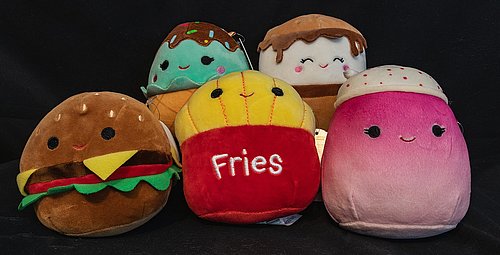
06Plush & soft collectablesWarmth over rarity - and retirement, not odds, creates the FOMO.
07Promotional & retailThe lowest barrier to entry of any format, and the clearest commercial job.
08Digital & in-gameThe pack rip lives inside every game that monetises randomised rewards.
09Exclusive & rare fandom merchIrreproducible by definition. Provenance is the product.
10Streetwear & sneakersA blind box drop where the product is fashion - and the exchange is live.
03 - History
A brief history of collecting
Nearly every mechanic in use today was invented as a sales device - and most of them are more than a century old.
1840
The Penny Black
The first organised collecting hobby. Sets, catalogues and specialist dealers - all the infrastructure of modern collecting - appear within a decade.
1880s
Tobacco cards
Companies insert stiffening cards into packs and print them with images. Series, completion and the drive to collect all 50, invented deliberately as a sales mechanic.
1909
The T206 era
The Honus Wagner card is withdrawn because he objects to his image promoting tobacco. Scarcity created by accident drove huge resale values.
Mid-century
Event-based collecting
The thing you can only get by being there takes hold - stadium giveaways and attendance exclusives.
1961
Panini launches
The album-and-sticker format spreads across Europe. A completing-the-book culture still running 70 years later.
1968
Hot Wheels
Mattel introduces die-cast cars with a hidden chase mechanic. Roughly 500m cars a year later, people are still searching store pegs.
1977
Star Wars
The modern toy licence era begins. Kenner's line - sold as an “early bird” certificate before the figures existed - invents pre-order collecting.
1993
Magic: The Gathering
The first modern TCG. Invented the booster pack, the rare/uncommon/common system, and the secondary trading market for cards.
1996
Pokémon
The 1990s collecting supercycle. Cards, Game Boy, Pokédex and virtual pets - collecting goes fully global and fully digital simultaneously.
2005
Webkinz
A stuffed animal with a code that unlocks a virtual pet. Physical purchase as digital access - the first mainstream phygital collecting product.
2020
Lockdown
Stuck at home, bored, nostalgic, with disposable income. Trading card sales explode.
2025
Pop Mart
Passes US$5.1bn in revenue. A blind box figure with no narrative becomes the must-have product of the year.
04 - Psychology
Why we can't stop: four stages
The dopamine system fires hardest in anticipation of reward, not on receiving it. That is why the pack before it is opened beats whatever is inside.
Stage 1 · Collect
"I want all of them"
Accumulation has roots in foraging - the brain treats acquisition as resource security. Wanting and enjoying are separate systems, and the wanting one is louder.
Schultz et al., dopamine & reward prediction; Belk 1995
Stage 2 · Curate
"These are my favourites"
Sorting and ranking is how we make sense of things. Objects you have organised feel more valuable than identical ones you haven't - the endowment effect. The shelf starts talking about you.
Thaler 1980, endowment effect
Stage 3 · Complete
"Gotta catch 'em all"
An unfinished set behaves like an unresolved question (the Zeigarnik effect). One missing sticker bothers you more than fifty. This is the mechanic card, sticker and blind box brands exploit directly.
Zeigarnik effect
Stage 4 · Connect
"It's who I am"
The collection stops being about objects and starts being about the person. For teens that is identity work; for adults returning to old collections it is nostalgia - which measurably increases meaning and belonging.
Read: nostalgia marketing and musicBelk 1988; Sedikides et al. 2008
05 - The fandom journey
Collectables are fandom super-tools
Our Fandom Journey - built on interviews with over ten thousand kids, teens and families worldwide - maps the steps from zero to super fan. Collectables are engineered to pull people up every rung.

01
Ubiquitous & relevant exposure
Collectables are walking media: the keyring on the school bag, the sticker on the laptop lid, the holographic card sleeved above a locker. Peer-to-peer and hard to ignore.
02
Instant impact
The pack rip and blind box are engineered first-contact moments. Quick, emotional, designed to be shared - opening videos are compelling viewing in their own right.
03
Levelling up
Exclusive drops, prestige items, scarcity and the thrill of the hunt. It is obvious how you are doing in your collection, and that position is shareable for status and kudos.
04
Belonging & community
Trading is a social ritual - swaps, conventions, playground negotiations. The collection signals who you are and who you are with.
05
Identity development
The curated shelf as self-portrait. The collection stops being about the IP and starts being about the person: the fan does not just follow the thing, they embody it.
Want help strengthening your own fandom journey? Drop us an email.
06 - The secondary market
The secondary market is not a side effect of collecting. It's part of the product.
Grading and authentication
Third-party services assess a card or comic's condition, seal it in a tamper-proof case, and assign a numeric grade.
A PSA 10 (Gem Mint) can be worth 10-50x the same card ungraded. PSA leads with 71.8% market share; Beckett and CGC cover the remainder.
In 2025, 26.8 million items were graded across all services, up 32% year on year - at peak demand in 2021, PSA temporarily stopped accepting new submissions.
Live shopping
Video-first commerce where the entertainment is the point.
Whatnot is the dominant platform - US$8bn in GMV in 2025, more than doubling year on year, with 20 million new accounts created in 2025 alone.
'Breaking' sits within this: a host buys a sealed case of cards, sells "slots" to viewers before opening it on stream, then ships each viewer their cards.
Rip and ship is the simpler version: buy a pack, watch it opened live, receive what's inside.
Exchanges and marketplaces
Platforms where buyers and sellers meet, with authentication and price discovery built in.
eBay remains the dominant marketplace for cards, comics and general collectables.
StockX (US$3.8bn valuation) and GOAT handle sneakers with authentication on every transaction.
Goldin Auctions and Heritage Auctions handle the premium end: signed memorabilia, graded cards, rare comics.
Vaulted custody
A physical card or collectable is professionally authenticated, then stored in a secure third-party vault.
The owner receives a digital certificate representing the asset - tradeable and transferable without the item ever moving.
Courtyard (courtyard.io) is the leading example: it bridges physical and digital collecting, enabling fractional ownership and instant settlement without the risks of storage or shipping. Unlike NFTs, the underlying asset is real and independently valuable.
07 - Warnings & regulation
Where collecting ends and gambling begins
The line between collecting and gambling gets more regulatory attention each year. And some of the biggest names in the business are on the wrong side of it.
The gambling question
Every core collecting mechanic - the blind box, the loot box, the pack rip, the gacha pull - is, structurally, a bet. You pay money for a random outcome. The difference between this and a slot machine is one of framing and social acceptability, not mechanism.
The UK, EU, US, China and Australia are all at various stages of legislating or scrutinising loot boxes and chance-based mechanics targeting children.
Read: global rules and regulations for marketing to kids, teens and families 2026Overproduction risk
"Junk wax" is the term from 1990s sports cards - when manufacturers flooded the market to meet demand, destroyed the scarcity that made the cards valuable, and triggered a decade-long collapse.
The lesson hasn't always been learned. Scarcity only works if it's real. Overproduction kills the category from the inside.
Fad risk
Pop Mart's share price fell sharply in early 2026 as growth concerns emerged after the initial Labubu craze.
While the macro trend of collecting endures, individual properties spike and fade.
Designing a collectable around a single character or trend is a different bet to designing one around a durable mechanic.
Fan exploitation - the Taylor Swift case
Taylor Swift's The Tortured Poets Department (April 2024) launched with multiple vinyl variants, it was exactly the same content just with a variety of different colours and finishes.
There are many who feel like this is exploiting fans, leveraging the intense parasocial attachment they have to the artist and their desire to own everything.
The question of where "clever marketing" ends and "fan exploitation" begins is one regulators and fan advocates are now asking.
08 - The playbook
8 steps to creating a $1B collectables line
Scroll - the playbook builds one step at a time.
1
Pick your mechanic
Blind/random reveal, set completion, tiered rarity, or event exclusivity - choose one as your primary engine, then add a second. The best lines layer mechanics: a blind box (random reveal) inside a series (set completion) with a secret chase figure (tiered rarity). Pop Mart does all three. Sticker albums do two.
2
Design your rarity architecture
Base / Uncommon / Rare / Ultra-Rare / 1-of-1. Every tier needs to be genuinely worth having, not just a diluted version of the rare. The base item is what most people get - it has to deliver. The 1-of-1 is what everyone talks about - it creates the legend.
3
Decide: IP first or mechanic first
You can build the mechanic around existing IP (Panini + FIFA, Pokemon + card game) or build the IP around the mechanic (Pop Mart's Labubu had no lore when it launched). Both work. IP-first is lower risk on acquisition, higher risk on licence dependency. Mechanic-first is harder to launch, but you own it entirely.
4
Build in the social layer from day one
The reason to trade is the reason to talk. Design the product so that duplicates have value - for swapping, gifting, or trading up. A collecting mechanic without a trading mechanic is a vending machine. A collecting mechanic with a trading mechanic is a playground and the playground is where the fandom lives.
Read: how fans shape brand identity through emotional resonance5
Make the secondary market work for you
A healthy secondary market increases primary sales - it tells prospective buyers that what they're buying holds value. Design for gradeability (consistent dimensions, quality packaging, clear rarity markings). Make prices discoverable. Don't fight the resale economy; it's free marketing.
6
Create physical touchpoints
Where can people experience, discover and collect in person? Stadium exclusives, store events, convention drops, flagship retail. The physical moment is the memory anchor.
7
Plan the series, not just the launch
The first series is a test. The second series is where you find out if you've built something durable. Design the IP or theme to evolve: seasonal updates, crossover editions, retired designs that create scarcity in back catalogue.
8
Get the regulation right before it gets you
Build odds transparency in from the start. Design age-appropriate mechanics for the age group you're targeting. Don't use dark patterns. The brands ahead of the regulatory curve will have a significant advantage as the rules tighten across Europe and the US over the next three years.
09 - Conclusion
Conclusion
Collectables have always been a thing, the core mechanics have elements that satisfy many of our neurological needs and desires.
But a few factors over recent years have really put fuel on the fire, from adults (re)joining the party, to a secondary market economy that acts as an enormous marketing flywheel, increasing perceived value and driving demand.
Whether you are in retail, hospitality, sports, entertainment or toys, collectables are a fandom super-tool. No other format closes the distance from first contact to super fan as fast.
However, with regulation looking more and more at this area, and the ethics surrounding fan exploitation being in the spotlight, it is worth talking to experts to make sure you get it right.
Talk to us
We are always available for your research, strategy and marketing needs, just drop us an email
hellouk@we-are-family.com10 - Reference
Glossary of terms
Click any term for its definition1-of-1+
Authentication / provenance+
Beckett+
Blind box+
Box break / breaking+
CGC+
Chase figure / chase variant+
Courtyard+
Dark patterns+
Die-cast+
Drop+
Endowment effect+
Fanatics+
Funko Pop+
Gacha+
GMV+
GOAT+
Good Smile / Nendoroid / figma+
Grading+
Hot Toys+
Junk wax+
Kidult+
Loot box+
NFT+
Pack rip+
Panini+
Parallel+
Phygital+
Propstore+
PSA+
PSA 10 / Gem Mint+
Rarity tier / architecture+
Rip and ship+
SKU+
Skin / cosmetic+
SNKRS app+
StockX+
Super Treasure Hunt+
T206+
TCG+
Topps+
Whatnot+
Wizards of the Coast+
Zeigarnik effect+
Sources include Circana, Market Decipher, Pop Mart financial results, Graders Choice, cllct, Whatnot, StockX, CGC, Propstore and Goldin Auctions. Full source list available on request.