Education
Research
Blog
The Hit Show Used to Be the Finish Line: What CMC Taught Me About Extending Kids IP
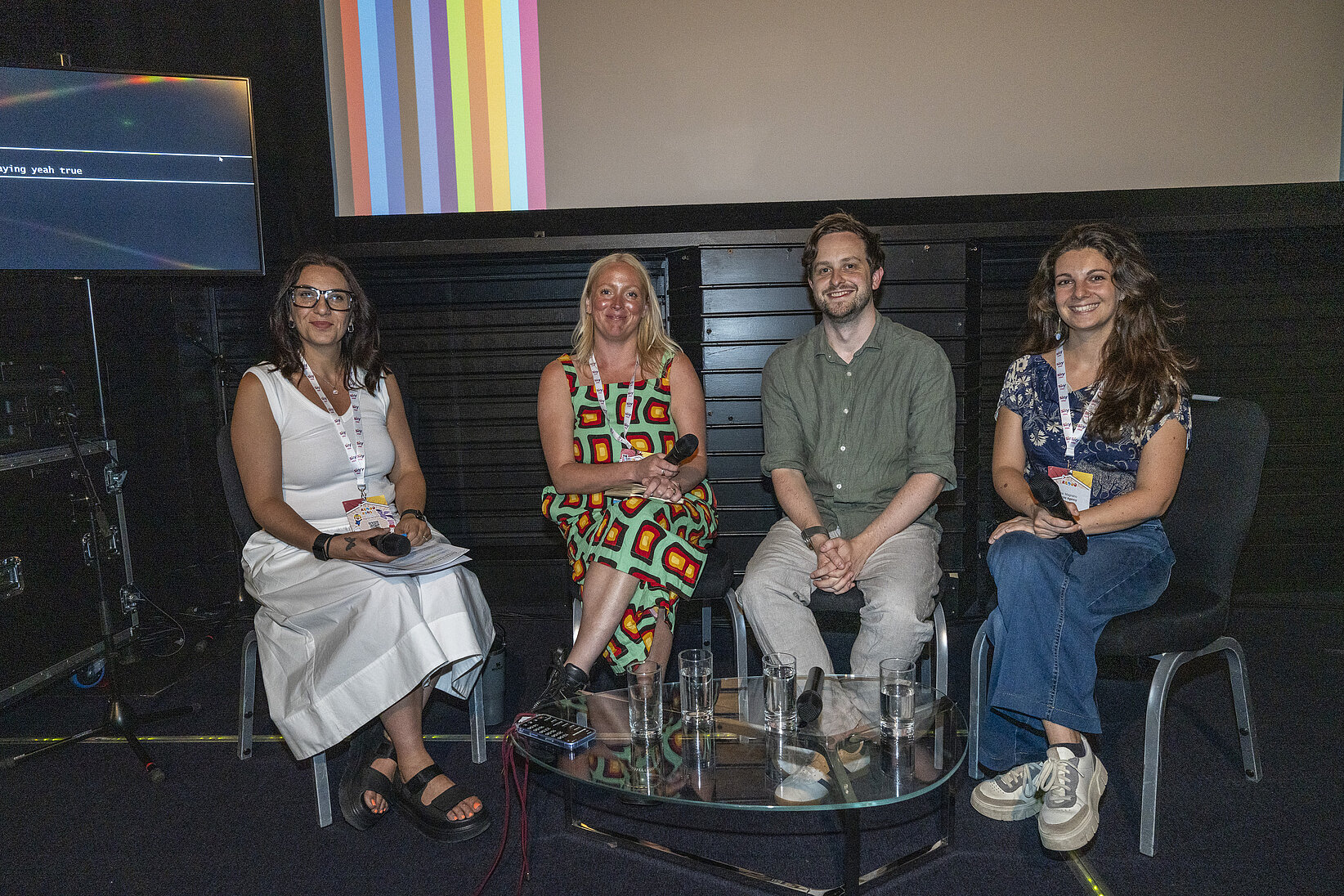
I drew the final panel of CMC this year. Hot room, bar open down the corridor, and a good chunk of the audience already quietly calculating their train home. The fact that anyone stayed says something about the subject, because it is the one nearly every IP owner in that building is wrestling with right now.
The moment we were talking about will be familiar to anyone with a child in the house. A kid watches something and something clicks. They do not just want to keep watching. They want to climb inside. They want to play. A hit show used to be the finish line. Now it looks much more like the starting point, and the leap from screen to play world is where the magic either survives or quietly leaks away.
Ed Barton, who runs games and interactive at Moonbug, put the failure rate more bluntly than I would have dared. Search almost any kids brand on Roblox, he said, and what you find is a graveyard. Not of bad ideas. Of perfectly reasonable ideas that nobody could execute or sustain.
So why does so much of this fail, when the strategic logic is sound?
Everyone asks what. Almost nobody asks why
Leia Manana, a child-centred designer whose work is grounded in child psychology, gave the sharpest diagnosis of the session. The industry, she said, is good at the what. What can we do with this IP, what can we develop from it. It is good at the where. Where can we be, where can we reach kids. It has even got reasonably competent at the how.
What it does not ask is why. Why would a child want to engage with this character in this way? Why did they fall for the character in the first place? And, she added, almost nobody asks what happens after. Not the short-term engagement spike, but the longer-term impact on the child and therefore on the loyalty.
That sounds like a philosophy question. It is actually the commercial question, and the Blippi story proves it.
Moonbug's first attempt at Blippi on Roblox was a Halloween trick or treat simulator, on the entirely rational grounds that Halloween is an enormous moment for the brand. It did not work. What worked was going the other way: finding an existing Roblox format, in this case a finding game, and rebuilding the franchise to live inside it.
Look at why that landed. Blippi is about curiosity. Field trips. Being interested in everything around you. A finding game is that essence expressed as mechanics. The audience did not have to be told the connection because they were playing it. Leia's response was that it made complete sense, and that the alternative, taking a popular format and slapping your brand on it, is something kids see through immediately.
Ed's other point deserves framing and hanging on a wall. The Blippi audience on Roblox is not the Blippi audience on YouTube. It is frequently the audience that has aged out of YouTube and thinks Roblox is the cooler place to engage with the brand. Same character. Different relationship. If your extension assumes it is the same relationship, you have already lost.
The money conversation nobody wants to have
I asked what the financial upside actually looks like for, say, a mid-sized UK producer with a live action kids show. Ed's answer: often there isn't one, and you need to go in with your eyes open about that.
He described the trap precisely, and I have sat in rooms where exactly this reasoning has been presented as a business case. The biggest games on Roblox make north of a hundred million dollars a year. We only need one per cent of that. It almost never works like that. These things are close to all or nothing, and things that look beautiful in a spreadsheet in March tend to stop feeling connected to reality the moment they meet an actual audience.
There are really two honest models. You invest because you genuinely believe there is a return you can own over time, typically something like a mobile product. Or you license to the partner best placed to take the risk, accept a smaller upside, and often end up considerably more profitable for it. What does not work is the middle, where the investment is real and the belief is not.
Then there is duration. You do not put ten videos on YouTube and call that a YouTube strategy. You do not put a game on Roblox and abandon it. The question Ed kept returning to was whether you are willing to sustain the commitment through the months where it does not live up to the deck, because that willingness is most of what separates a franchise from a stunt. Pokémon has been compounding since the mid-nineties. Nobody arrives at that position in a launch window.
What survives the transition
Beth Abbott of A+C Studios works in toymation, animating with the physical product itself, and her advice was the most immediately usable thing anyone said all session. Do not ask how we will make this toy. Ask how this character will play.
That reframe does a lot of work. It moves you off the likeness, which is the fragile part, and onto the behaviour, which is the durable part. It is also the answer to the trickiest structural problem in this space, which is what you do when the IP is a real human being. Moonbug's route with Blippi was to develop the brand beyond the person, so that packaging leans on the bow tie and the glasses rather than a face that ages. Disney has decades of expensive evidence about what happens when you do not build that separation early.
Underneath all of it, there is a trust dividend and it is measurable. Leia's observation was that families are increasingly willing to pay for things that are genuinely good and that take children's wellbeing seriously. Beth's version was blunter and I have not stopped thinking about it: kids are not stupid, they know when they are being sold to, and that content does not perform particularly well anyway. The commercial argument and the ethical argument have quietly converged.
Which brings me to parents, who I have been banging on about at CMC for two years now. Kids' love plus parental tolerance is what turns a character into a family tradition, and this generation of parents is a different animal. They are comfortable with games, they will happily go into Roblox settings, and many of them are actively looking for IP they loved as children to share with their own.
So what for brands
Three questions, in order, before you commit budget to extending kids IP.
What did they actually fall for? Not the character. The feeling. Then find the format that expresses it rather than the format that is currently popular.
Are you funding a business or buying awareness? Both are legitimate. Confusing them is not, and it is where most of the money goes.
How long will you stay? If the answer is a launch window, save yourself the trouble.
And, borrowing from Katherine Carr's keynote, the advice that underwrites all of it: listen to the kids. Then listen again.
What did your audience actually fall for? If you cannot answer that with evidence rather than instinct, that is the piece of work worth doing before anything else.
To watch the full session, see here: https://www.youtube.com/watch?v=FS1eyvycx4k