Education
Research | Social media | Marketing
Blog
Kids are not watching less. They are watching differently.
Let me guess how the last planning cycle went. Somebody senior asked why the TV numbers keep sliding. Somebody else forwarded a report about attention spans. A third person suggested TikTok, without being able to say what for. And you sat there with a media plan that technically still delivers, wondering why it feels like you're planning for a world that's quietly left the building.
If that's roughly where you are, you're not behind. Most of the industry is in the same meeting. The problem isn't that you've missed something obvious. It's that the story we've all been told about kids and screens is wrong in a very specific way, and once you see it, a lot of the chaos starts making sense.
The story goes: attention is collapsing, TV is dying, kids have disappeared into their bedrooms with their phones, the living room is a museum. Tidy, familiar, and mostly untrue.
Kids are not watching less. They are watching differently. Those sound similar and they are not. A strategy built for shrinking attention looks nothing like a strategy built for attention that packed up and moved house.
The year the crossover actually happened
For a decade we've all sat through conference talks about the crossover that was coming. Well, here it is. eMarketer projects 2026 as the year YouTube viewership among US kids overtakes linear TV. Not creeps up on it. Passes it.
The UK is telling the same story in its own accent. Ofcom's data shows children's broadcast viewing falling year after year, and it's tempting to read that as kids watching less. But the hours haven't vanished. Sit with the numbers a bit longer and you can see them turn up somewhere else entirely.
And this is the bit that genuinely surprised me when it clicked: they've turned up back in the living room.
The plot twist nobody planned for
We spent years calling the phone the second screen. Turns out we had it backwards.
YouTube's own 2026 priorities are built around TV viewing, because that's where their growth is coming from. Sesame Street's channel already gets more than half its watch time on connected TV screens. And Precisify's new US research shows what that looks like inside actual homes: three quarters of Gen Alpha watching YouTube, four in five among the 10 to 12s, and more than half of parents co-viewing with their kids, mostly on the big screen in the shared family space. Most of those parents get purchase requests while it's happening.
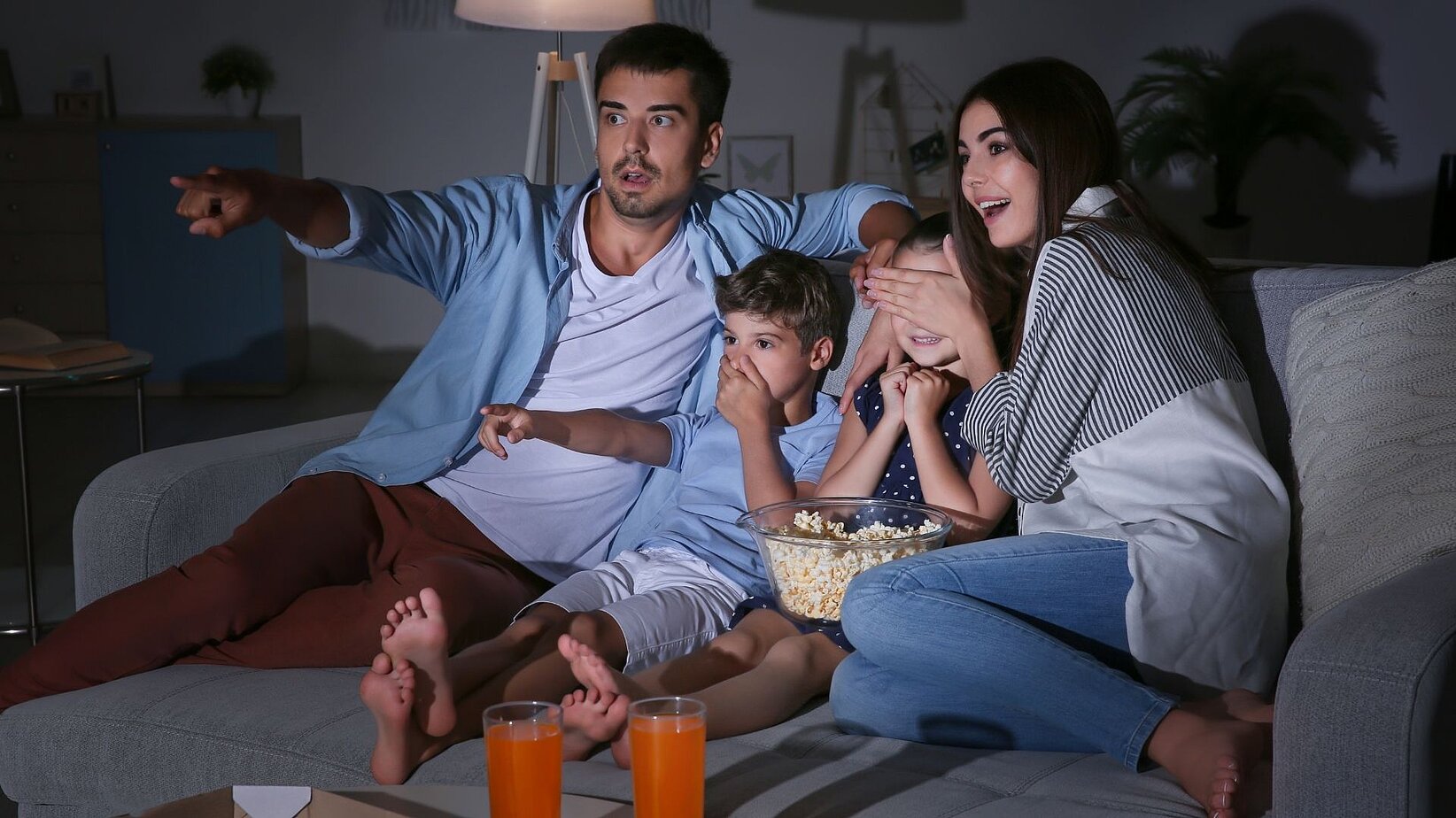
So the family didn't scatter into separate rooms after all. A big chunk of them are back on the sofa together, in front of the biggest screen in the house. It's just that what's on that screen isn't what your media plan thinks it is. Family viewing didn't die. It changed suppliers.
Honestly, there's something quite hopeful in that. The thing everyone mourned is still there. It just stopped answering to the old names.
What you can actually do with this
Enough diagnosis. If attention has moved rather than shrunk, three practical things follow, and none of them needs a bigger budget. They need a different one.
Your creative has to work with the sound on and off, because the same piece of content now lives on a phone in a bus queue and a 55 inch screen in a lounge, sometimes within the same hour. If it only really works in one of those places, you're paying full price for half an asset.
Your formats have to travel. Shorts to living room is one journey now, not two channels with two briefs. Anything locked to one size, one length or one orientation is only working half the room.
And the big one: depth beats volume. Families choosing together from an infinite library don't reward the loudest thumbnail. They reward the world worth coming back to. Shallow content gets a view. A proper world gets a habit. If you're deciding where the next pound goes, it goes into depth.
The bit nobody wants to say out loud
Here's the uncomfortable part, and I'd rather say it than dance around it. Most kids and family media strategies were built for a world that no longer exists, and they survive because the dashboard still looks fine. Reach holds up. Impressions deliver. Nothing flashes red. But reaching an audience that has reorganised is not the same as mattering to it, and that gap is exactly where budgets go to quietly underperform.
We see this across every sector we work in at WAF. Gaming, sports, entertainment, hospitality, consumer products, same pattern everywhere. And the brands doing well right now are noticeably not the ones spending the most. They're the ones who clocked earliest that the room had changed and rebuilt for where families actually are.
If you only do one thing
Don't rush to move money around. Start by finding out where your audience actually is now, how they move between the phone and the big screen, and whether your creative and your IP can make that journey with them. That one honest look tends to reshape everything that comes after it, which is exactly why it should come first.
And if you'd like a second pair of eyes on it, that's a conversation we have most weeks and we're always happy to have another. But even if we never speak, take the question with you into your next planning meeting: is this strategy built for where families actually are, or where we last checked?
Sources: eMarketer via Statista, US kids YouTube vs linear TV projections; Ofcom Children and Parents Media Use report; YouTube 2026 priorities; Precisify Gen Alpha US media consumption report 2026.